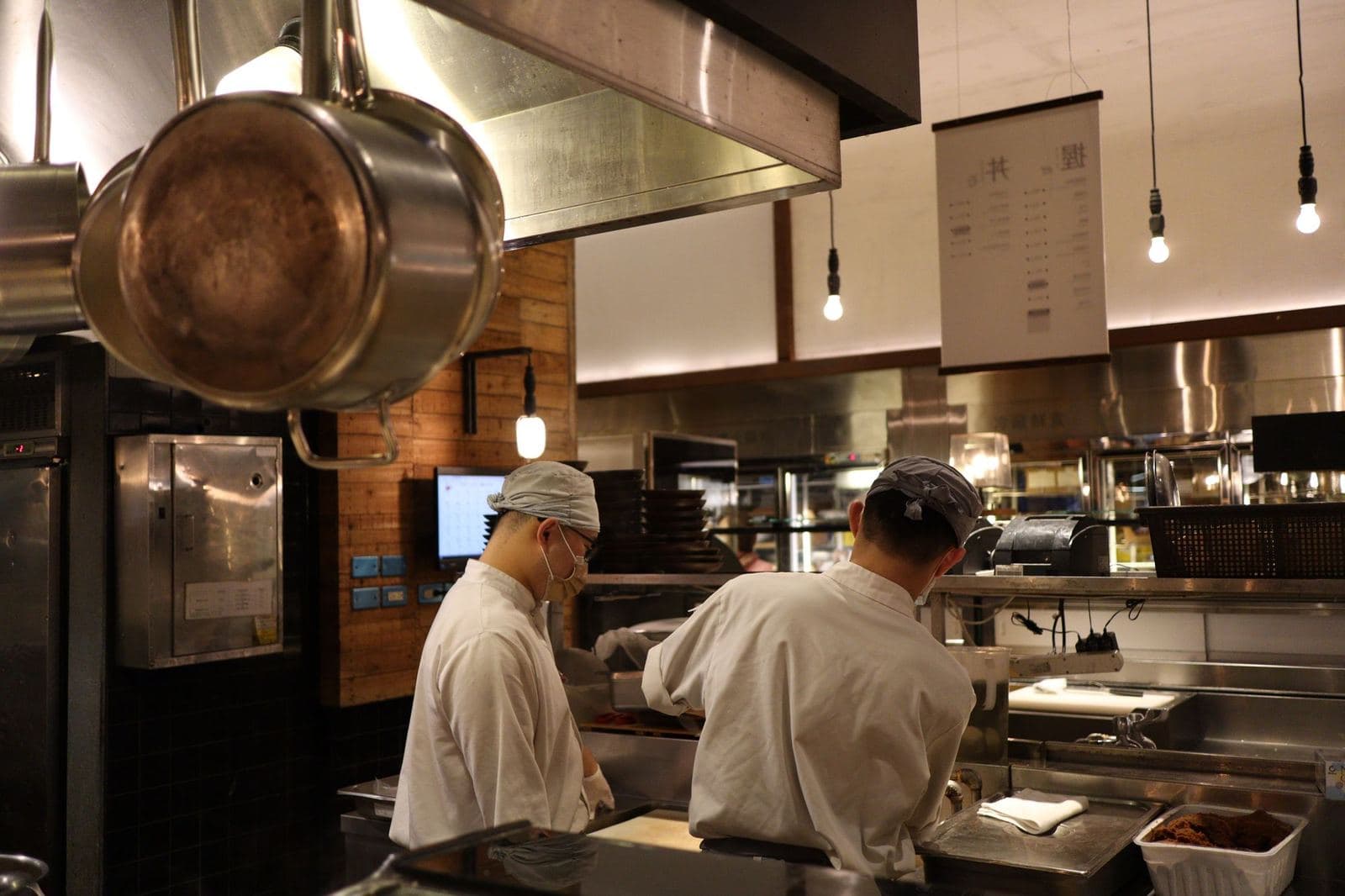
A POS records what a guest ordered, and a kitchen display tells the cooks what to make. Neither of them watches the cooking itself. AI Food Intelligence links kitchen AI cameras to the POS, so every order is followed from ticket to table, with quality, timing and hygiene tracked in real time. This article explains how that loop works, what the camera checks, and how one event carries through to stock, cost and accounting.
How the loop works, step by step
Kitchen AI cameras and the POS or kitchen display system (KDS) work as one loop, from order to service. The loop has five steps.
- 1.Order at the POS. Orders come from the table-side Voice Bot, QR ordering or front-of-house staff.
- 2.To the kitchen display. Each order is routed by station and queued automatically.
- 3.AI camera watches cooking. The camera checks timing, plating and hygiene.
- 4.Status back to the POS. The camera posts ready, late or pending status to the POS and KDS automatically.
- 5.Serve, bill, insights. Kitchen data appears on the management dashboard.
Step four is what makes this a loop rather than a one-way ticket. AI-camera status flows back to the POS and KDS in real time through the API, so the systems that took and routed the order also receive its status: ready, late or pending. Kitchen data then appears on the management dashboard, which also shows revenue and cost.
Six things the camera checks
The checks run on existing CCTV or a few added cameras. Because the camera is linked to the POS, it can compare each plated dish with its POS ticket and time each dish at every station. It checks six things.
- Order accuracy: compares the plated dish with the POS ticket before it leaves the pass, so there are fewer wrong orders and remakes.
- Cook time and late orders: times every dish at every station and bumps the kitchen ticket automatically when the dish is ready.
- Hygiene and SOP: checks caps, masks, gloves, handwashing and cleaning schedules on camera.
- Instant alerts: sends late orders, dishes left at the pass and other anomalies to managers on LINE or the app.
- Waste and food cost: logs discarded food with a camera and scale, linked to stock and cost per dish.
- Photo evidence: lets you replay any order to settle complaints and audit quality afterwards.
Alerts reach managers on LINE or the app. This follows the platform principle that AI assists and people decide, with instant alerts to the people responsible. Photo evidence is useful afterwards as well: any order can be replayed to settle a complaint or audit quality.
One event, from the table to the accounts
The kitchen loop is one part of a wider restaurant journey. AI Food Intelligence is a single-source-of-truth store system: front-of-house sales, payments, ingredient stock and back-office accounting all come from one event. Management sees the whole business and its costs in real time.
- Table: the Voice Bot takes orders and gives menu tips by voice, guests can sign up as members at the table, and members are recognized on camera.
- POS and QR ordering: guests order by QR code, every payment method is covered, and billing includes loyalty points.
- Kitchen: AI cameras linked to the POS track order status, prep time per dish, quality, hygiene and late orders.
- Back office and accounting: ingredients are deducted automatically, cost per dish updates in real time and accounting posts from a single event.
- Management insights: traceable data with sources, instant alerts on anomalies and a view of the whole business across every branch.
As an example, take one order for a single dish. The event that records the sale at the POS also deducts that dish's ingredients from stock, updates its cost per dish and feeds accounting. If the plate is later thrown away, the camera and scale log the discarded food, linked to the same stock and cost per dish.
What operators overseas report
Some companies overseas have published results from kitchen AI. Each figure below is quoted with its source, as listed in our 2026 company profile.
- +15% customer quality scores when an AI camera checks every order before hand-off. Source: Domino's ANZ, 13M pizzas (brand-reported).
- −54% kitchen food waste with an AI camera and scale logging waste. Source: IKEA worldwide, 2017–22.
- +19.6% speed of service from a kitchen-flow and AI camera system. Source: Dragontail / Yum! Brands (vendor-reported).
These are results reported by other companies, not Ai-Ai-Ai results. Brand-reported and vendor-reported mean the figure comes from the company named. None of them is a forecast for your kitchen.
Works with our POS or yours
The loop works with the AI Food Intelligence POS and with any open-API POS or KDS, because camera status moves through the API. That means the kitchen cameras can also work with an existing POS or KDS, if it has an open API. On the AI Operations Platform, POS and CCTV are both data sources, and the Data & Integration layer, which includes the API, connects the platform to your other systems.
For IT managers, two practical questions follow from this: does the current POS or KDS have an open API, and which kitchen stations does the existing CCTV already cover? Setup then follows the standard platform steps: we activate and configure the platform, import your data, connect the APIs and train your team for go-live. AI Food Intelligence is offered by subscription, and you pay only for the modules you use, monthly or yearly. It suits restaurants, retail stores and multi-branch chains.